
Analyzing Slot Volatility: How it May Affect Your Session
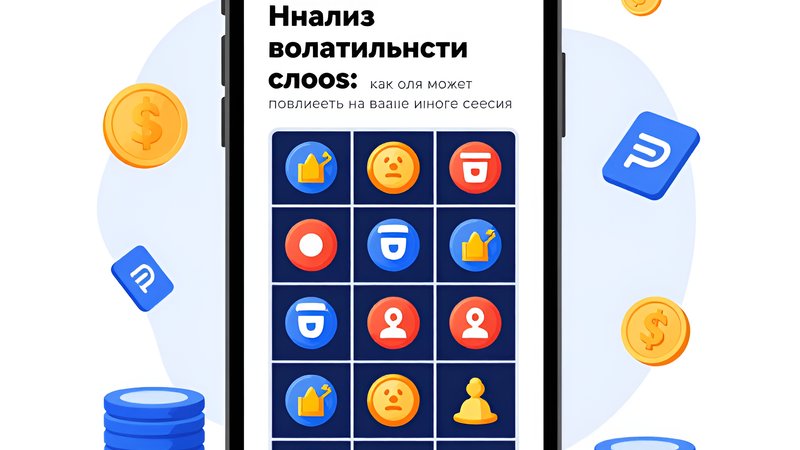
Volatility and Variance: Managing Expectations in Slots
When playing fast payout crypto slots in EUR, you will likely see terms like 'Low Volatility' or 'High Volatility' in the game info sections. It is crucial to understand that these terms are not a promise of a win, but a description of the game's mathematical behavior. We must emphasize: there is no such thing as a winning strategy for slots, as the outcome of every spin is determined by a Random Number Generator (RNG).
Low Volatility Slots
Based on our review, low volatility games may provide more frequent, but smaller, payouts. These games could be suitable for players who prefer a longer session with more consistent, smaller wins. However, the likelihood of hitting a massive jackpot in these games is typically lower.
High Volatility Slots
Conversely, high volatility games may go for long periods without any payout at all. When a win does occur, it could potentially be much larger. In our opinion, these games are more 'swingy' and may require a larger bankroll to withstand the dry spells.
- Bankroll Management: Adjusting your bet size based on volatility may help you play longer.
- RTP vs. Volatility: A high RTP (Return to Player) tells you what the game pays back over millions of spins, but volatility tells you *how* it pays it back.
- Session Goals: Setting a loss limit before starting is a key part of a healthy gaming habit.
Because gambling always carries risk, we urge all players to prioritize responsible gambling. Please play within your limits and remember that the house always has a mathematical edge. If you feel that your gaming is becoming a problem, we recommend contacting organizations such as GamCare or BeGambleAware.
In summary, choosing a slot based on volatility is about matching the game to your personal risk tolerance. Whether you prefer the steady trickle of a low-volatility game or the high-stakes tension of a volatile one, the result is always random. According to our methodology, the best approach is to treat every single spin as an independent event with no correlation to the previous one.